Comparison
MCP vs traditional APIs: how it's different
MCP is a standard protocol for exposing tools and data to AI models; a traditional API is a bespoke interface your code calls. Here is when each one fits.
MCPOrbit Team
Engineering, MCPOrbit
- Published
- Updated
- · Updated
- Read time
- · 6 min read
MCP is a standard protocol for exposing tools and data to AI models so any compatible client can discover and use them; a traditional API is a bespoke interface your own code integrates against directly. MCP does not replace your APIs. It standardizes how AI clients reach them.
A useful way to hold it: your REST API is still the thing that does the work. MCP is the layer that lets an AI assistant find that capability, understand it, and call it the same way it calls every other tool, without a developer writing a custom connector for each assistant.
How is MCP different from a REST API?
A REST API assumes a developer read the docs and wrote code to call specific endpoints. MCP assumes a model will discover capabilities at runtime and decide which to call. That is why an MCP server ships descriptions and JSON Schemas with every tool: the consumer is a language model choosing among options, not a programmer who hard-coded the call. MCP also carries primitives a REST API has no concept of: resources for context and prompts for user-triggered workflows.
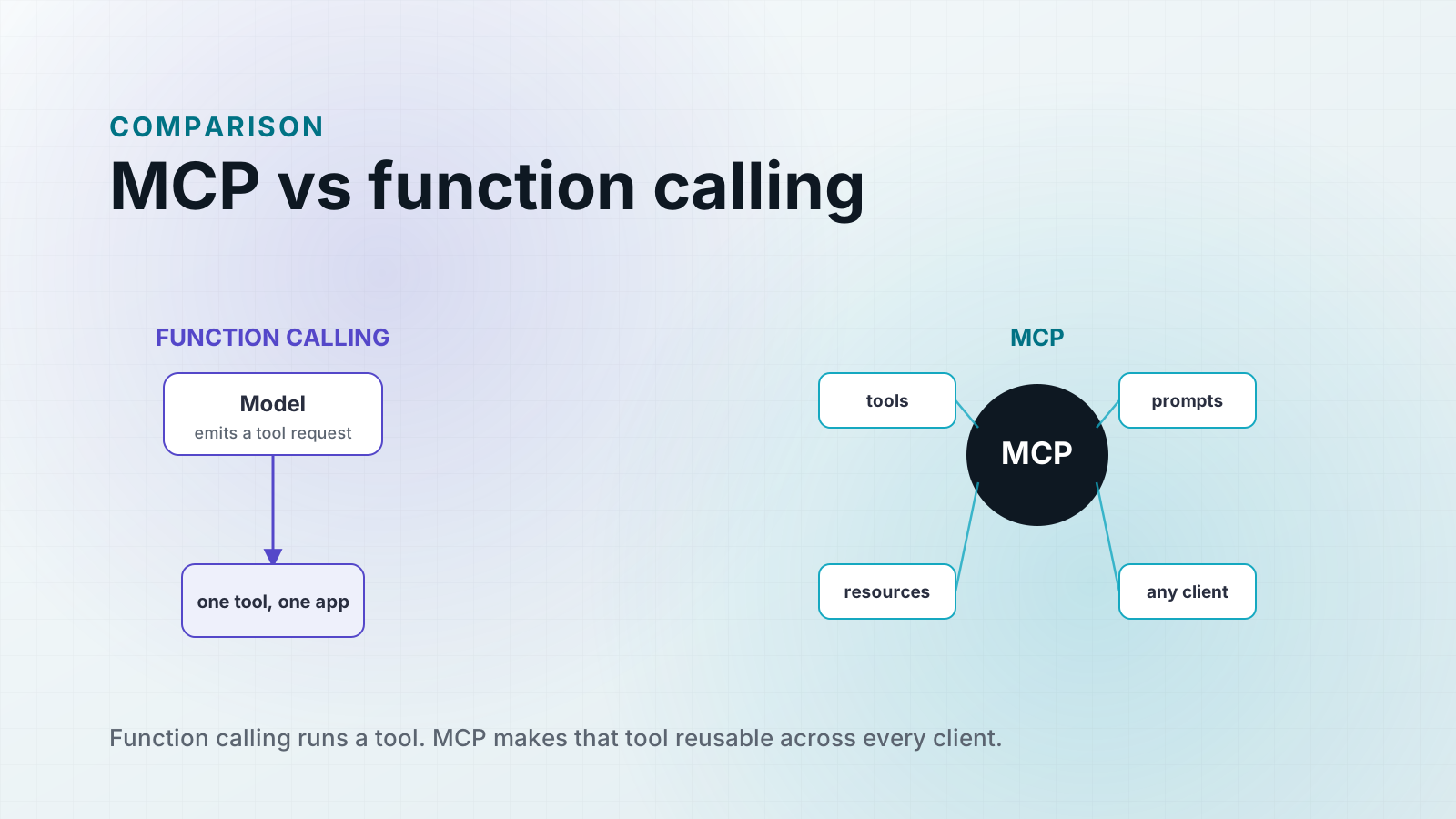
MCP vs function calling: aren't they the same?
Function calling is how a single model is handed a list of functions it may call in one request. MCP is how those functions get to the model in the first place, as a reusable, cross-vendor server instead of a hand-maintained list embedded in each app. Function calling is the in-the-moment mechanism; MCP is the distribution standard. They compose: an MCP client typically turns a server's tools into the function-calling format the underlying model expects.
MCP vs plugins (like the old ChatGPT plugins)
Early AI plugin systems were tied to one product and one vendor's ecosystem. MCP is client-agnostic and two-way: the same server works across any host that speaks the protocol, and servers can request capabilities from the client (such as sampling) rather than only answering calls. That portability is the core reason MCP gained traction where single-vendor plugin formats stalled.
MCP vs traditional APIs, side by side
                     Traditional API           MCP
-------------------  ------------------------  ------------------------------
Primary consumer     Your application code     An AI client, on the model's behalf
Discovery            Read docs, write code     Runtime: list tools + schemas
Interface style      Bespoke per API           One standard across all servers
Beyond actions       Actions only              Tools + resources + prompts
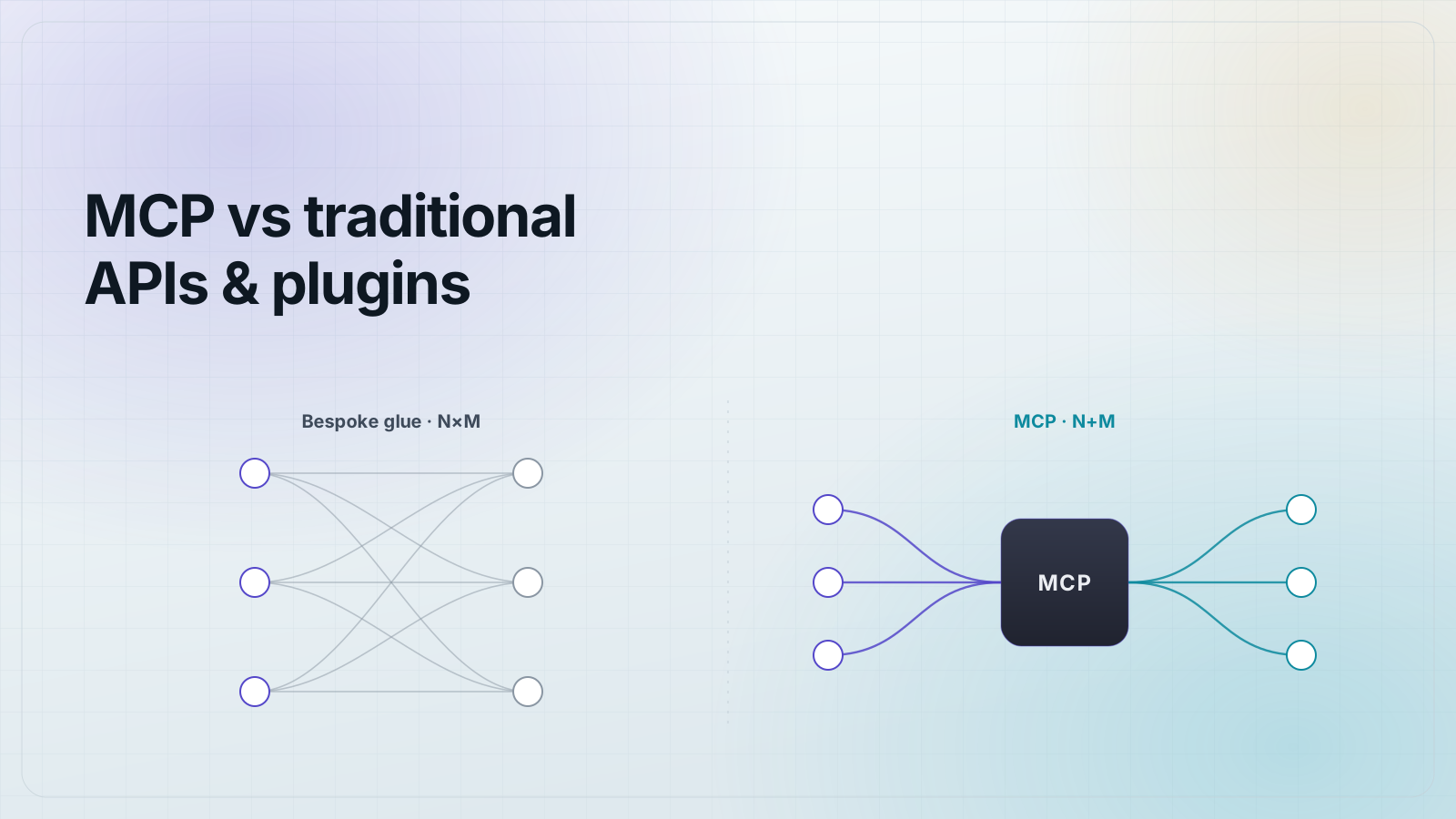
Integration cost     N x M custom connectors   N + M (wrap once, reuse everywhere)
Direction Request/response Two-way (server can call client)So is MCP just an API?
Not quite. MCP is a protocol, a fixed set of message types and rules (built on JSON-RPC 2.0) that any client and server can implement, the way HTTP is a protocol and your website is not. An individual MCP server exposes API-like actions, but the value is the shared contract around them: uniform discovery, uniform invocation, and primitives designed for how models actually consume context.
Frequently asked questions
- Is MCP a replacement for REST APIs?
- No. MCP standardizes how AI clients reach capabilities; your REST API still does the underlying work. In practice teams keep their API and add an MCP server in front of it so assistants can use it without a custom integration.
- What is the difference between MCP and function calling?
- Function calling hands a single model a list of callable functions within one request. MCP is the reusable, cross-vendor way those functions reach the model. Function calling is the mechanism; MCP is the distribution standard, and they work together.
- Why use MCP instead of a custom integration?
- A custom integration is one connector per app-and-tool pair, which grows as N×M. MCP wraps a tool once as a server that every compatible client can use, turning the problem into N+M and eliminating repeated glue code.
- Is MCP just an API?
- MCP is a protocol, not a single API. It defines standard message types over JSON-RPC 2.0 so any client and server interoperate. An individual server exposes API-like actions, but the value is the shared contract: uniform discovery and invocation plus resources and prompts.
- How is MCP different from OpenAI plugins?
- Plugin formats were tied to one product and vendor. MCP is client-agnostic and two-way: the same server works across any host that speaks the protocol, and servers can request capabilities from the client, not just answer calls.
About the author
MCPOrbit Team
Engineering, MCPOrbit
The MCPOrbit engineering team builds MCPOrbit, a free desktop client for the Model Context Protocol. It connects to any MCP server so you can browse its tools, call them by hand, and run them through a real agent loop.