Comparison
MCP vs A2A: what is the difference and when to use each
MCP and A2A solve different problems. MCP connects one agent down to its tools, data, and files. A2A connects one agent sideways to another agent so they can delegate work. They compose rather than compete: A2A between the agents, MCP inside each. Here is the difference and how to pick.
Mark
Head of Marketing, MCPOrbit
- Published
- Updated
- · Updated
- Read time
- · 8 min read
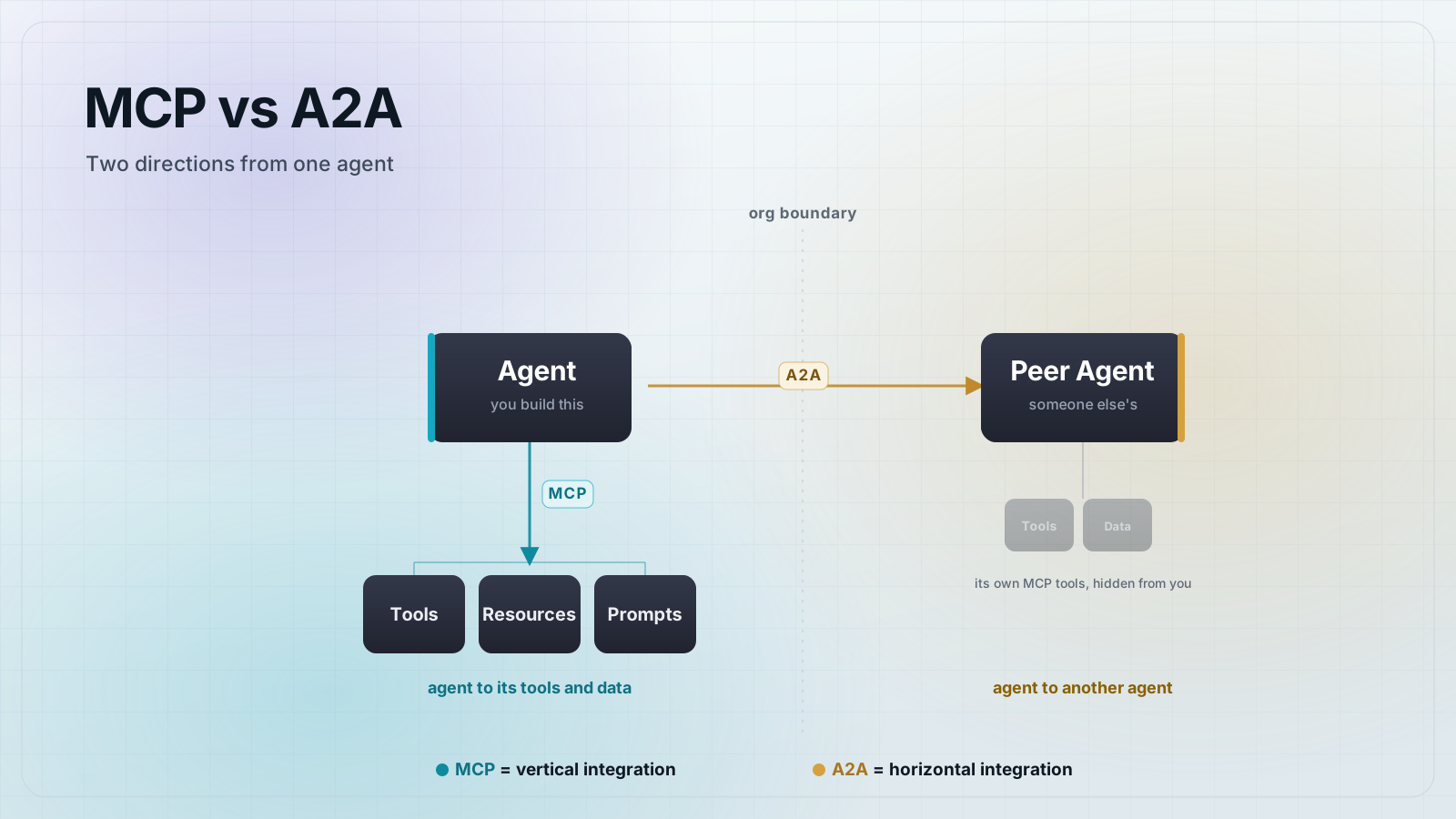
MCP and A2A are not competitors. They work at different layers. The Model Context Protocol (MCP) connects one AI agent down to the tools, data, and files it needs to do a job. The Agent2Agent protocol (A2A) connects one agent sideways to another agent so the two can delegate work without either side knowing how the other is built. If you are choosing between them, the honest answer is that they are not alternatives: A2A goes between the agents, and MCP goes inside each agent.
What is the difference between MCP and A2A?
The one-line difference is direction. MCP points down from an agent to its capabilities: an MCP server exposes tools the agent can call, resources it can read, and prompts a user can invoke, and the agent stays in control of every call. A2A points across from one agent to another: it lets an agent hand a task to a peer agent, wait for the result, and never see how that peer did the work. MCP is how an agent uses a tool. A2A is how an agent hires another agent.
That difference in direction drives every other difference. Because an MCP server is a capability, its interface is a list of concrete tools with typed inputs. Because an A2A agent is a collaborator, its interface is an advertisement of what it can take on and an endpoint to send work to. One is a menu of functions; the other is a contractor you brief.
MCP vs A2A at a glance
The table lines the two protocols up on the decisions that actually differ. Read it as two halves of one stack, not two options for the same slot.
                     MCP                          A2A
--------------------------------------------------------------------------
Connects             agent -> tools & data        agent -> agent
Integration          vertical (downward)          horizontal (sideways)
Unit of work         tool / resource / prompt     task / message
What the peer is     a capability you call         an opaque agent you brief
Discovery            tools/list from the server   Agent Card at a well-known URL
Transport            JSON-RPC: stdio or HTTP       JSON-RPC over HTTP (+ SSE)
State                stateless core (2026-07-28)  stateful task lifecycle
Maintainer           Anthropic (Nov 2024)         Linux Foundation (from Jun 2025)
Use when             one agent needs a tool        one agent delegates to another
How does discovery work in each protocol?
Discovery is where the two feel most similar and behave most differently. In MCP, a client connects to a server and calls tools/list to get every tool, with its name, description, and input schema, then calls each tool directly. Discovery is a live listing of functions.
In A2A, an agent publishes an Agent Card: a JSON document at the well-known path /.well-known/agent-card that states the agent's identity, its skills, its service endpoint, and the authentication it requires. A calling agent reads the card before any interaction begins to decide whether this peer can take the task. A2A v1.0 added signed cards so the caller can verify the publisher. The MCP equivalent, tools/list, describes callable functions; the A2A Agent Card describes a collaborator's scope.
How does the unit of work differ?
MCP works in tool calls. The agent sends a request naming a tool and its arguments, the server runs it, and the server returns a result. It is a function call dressed as JSON-RPC, and under the 2026-07-28 spec the core is stateless: any server instance can answer any request, and longer jobs move to the tasks extension.
A2A works in tasks. A calling agent sends a task with sendMessage, and the receiving agent moves that task through a lifecycle: submitted, working, input-required, completed, or failed. For long jobs the caller uses sendMessageStream and receives Server-Sent Events as the task progresses. A2A is stateful by design because delegated work takes time and the caller needs to track it. That statefulness is the opposite of MCP's stateless core, and it is a direct result of the different job each protocol has.
When should I use MCP?
Use MCP when a single agent needs to reach a tool, a database, an API, or a set of files, and you want that agent to stay in control of every call. This is the common case, and for many products it is the only protocol you need.
- One agent needs to call tools, read data, or expand prompts, and you own the logic that decides when.
- You are exposing a capability, a Postgres query tool, a REST wrapper, a filesystem, for any compliant client to use.
- You want typed, inspectable calls: a fixed list of tools with input schemas the model fills in.
- The work is a bounded operation that returns a result, not an open-ended job you hand to someone else.
When should I use A2A?
Use A2A when one agent needs to delegate a whole task to another agent it does not control, especially across a team or company boundary. The point of A2A is opacity: the caller briefs a peer and trusts it to deliver, without depending on how that peer is built or which tools it uses inside.
- One agent must hand off work to another autonomous agent and wait for a result.
- The two agents are built by different teams or companies and should stay black boxes to each other.
- The delegated work is long-running or multi-step, and the caller needs a task lifecycle to track it.
- You want a peer to advertise its own scope through an Agent Card rather than expose a fixed tool list.
Can you use MCP and A2A together?
Yes, and once you have a second agent with its own tools you need both. The two protocols occupy different layers, so they stack cleanly. A2A connects the agents to each other; MCP connects each agent to its own tools. A planning agent can delegate a research task to a specialist agent over A2A, and that specialist agent can, on its own, call a web-search tool and a database over MCP to do the work. The planner never sees the MCP calls; it only sees the A2A task move from working to completed.
A useful mental model: A2A is the org chart between agents, and MCP is each agent's toolbox. If you find yourself asking whether to use one or the other, check which question you are answering. "How does this agent get work done?" is MCP. "How does this agent get help from another agent?" is A2A.
Related guides
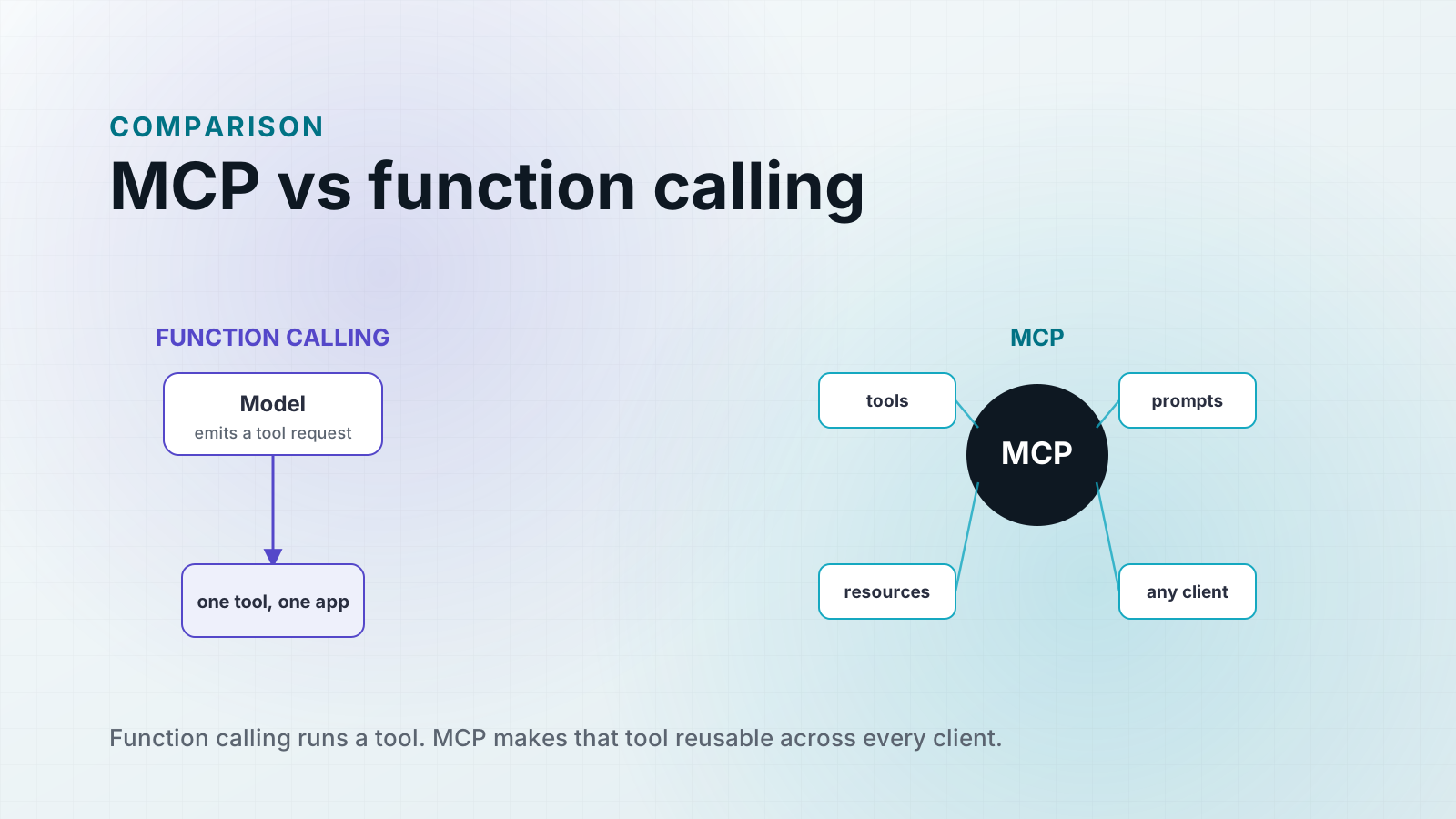
- MCP vs function calling: what is the difference and when to use each: mcporbit.com/blog/mcp-vs-function-calling
- MCP vs traditional APIs: how it is different: mcporbit.com/blog/mcp-vs-traditional-apis
- What is the Model Context Protocol (MCP): mcporbit.com/blog/what-is-the-model-context-protocol
- MCP tools vs resources vs prompts: which to use: mcporbit.com/blog/mcp-tools-vs-resources-vs-prompts
Frequently asked questions
- Is A2A a replacement for MCP?
- No. MCP connects one agent to its tools and data; A2A connects one agent to another agent. They work at different layers, so they stack rather than substitute: A2A between agents and MCP inside each agent.
- Who maintains MCP and A2A?
- MCP was released by Anthropic in November 2024 and is an open standard for connecting AI apps to tools and data. A2A was launched by Google in April 2025 and donated to the Linux Foundation on June 23, 2025, where it reached a v1.0 stable release.
- Do MCP and A2A use the same transport?
- Both speak JSON-RPC over HTTP, which is why they look similar. MCP also supports stdio for local servers and is stateless at its core as of the 2026-07-28 spec. A2A runs over HTTP with a stateful task lifecycle and uses Server-Sent Events for streaming updates on long tasks.
- What is an Agent Card in A2A?
- An Agent Card is a JSON document an A2A agent publishes at /.well-known/agent-card. It states the agent's identity, skills, service endpoint, and required authentication, so a calling agent can decide whether to delegate work before any interaction starts. It is A2A's discovery mechanism, the rough equivalent of MCP's tools/list.
- If I am building one agent with tools, which do I need?
- MCP. A2A only becomes relevant once you have a second autonomous agent that your agent needs to delegate to. For a single agent calling databases, APIs, or files, MCP alone is the right and complete choice.
- How do MCP and A2A fit in a multi-agent system?
- Use A2A to connect the agents to each other across team or company boundaries, and MCP to connect each agent to its own tools and data. A2A is the org chart; MCP is each agent's toolbox.
About the author
Mark
Head of Marketing, MCPOrbit
Mark leads marketing at MCPOrbit, the free desktop client for the Model Context Protocol. He writes the build-it and reliability guides, and the code in them is run before it ships.